A respectful approach to the environment
The goal in managing the vineyard is first to create the conditions for a healthy plant.
Soil life above all
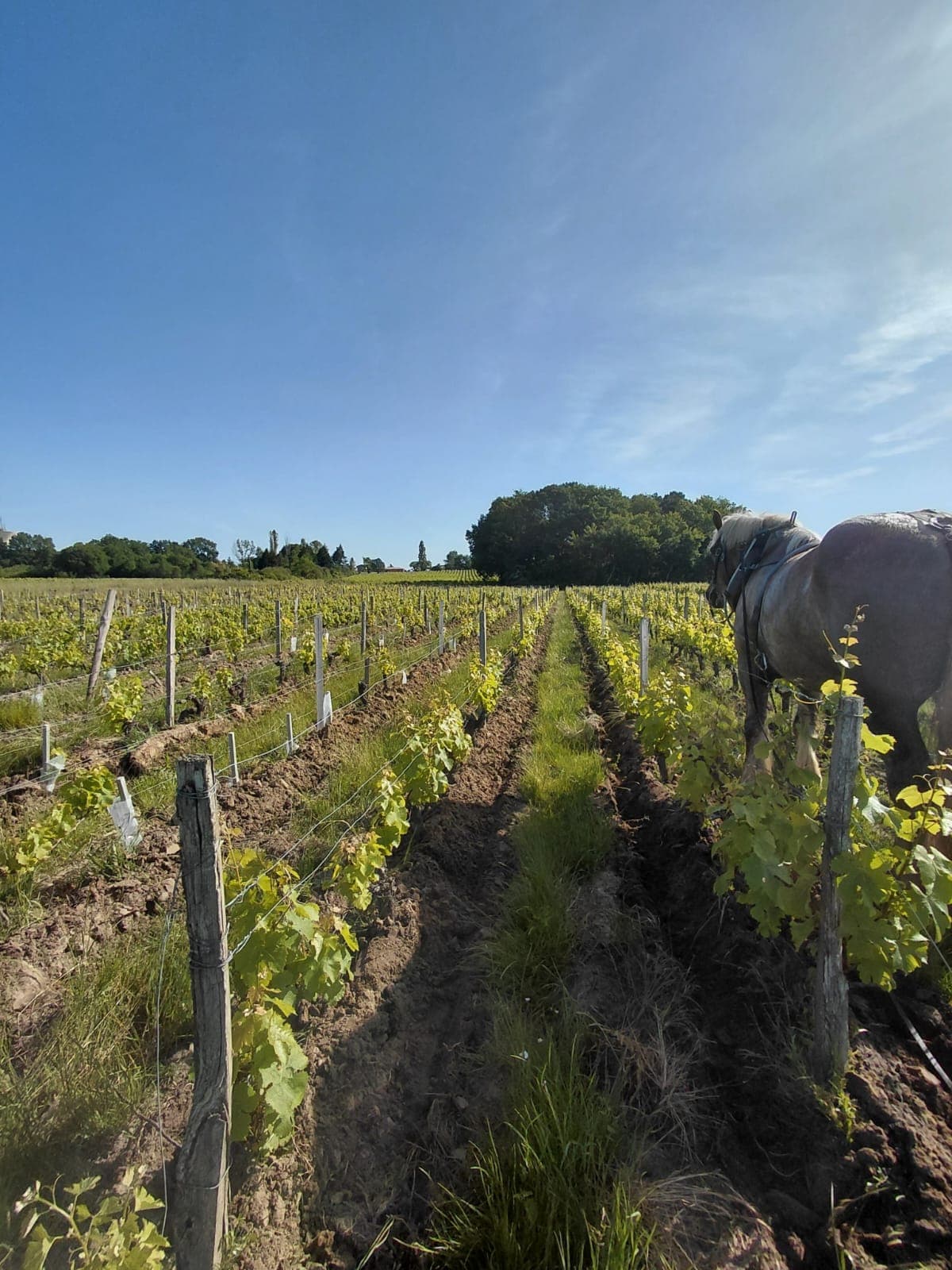
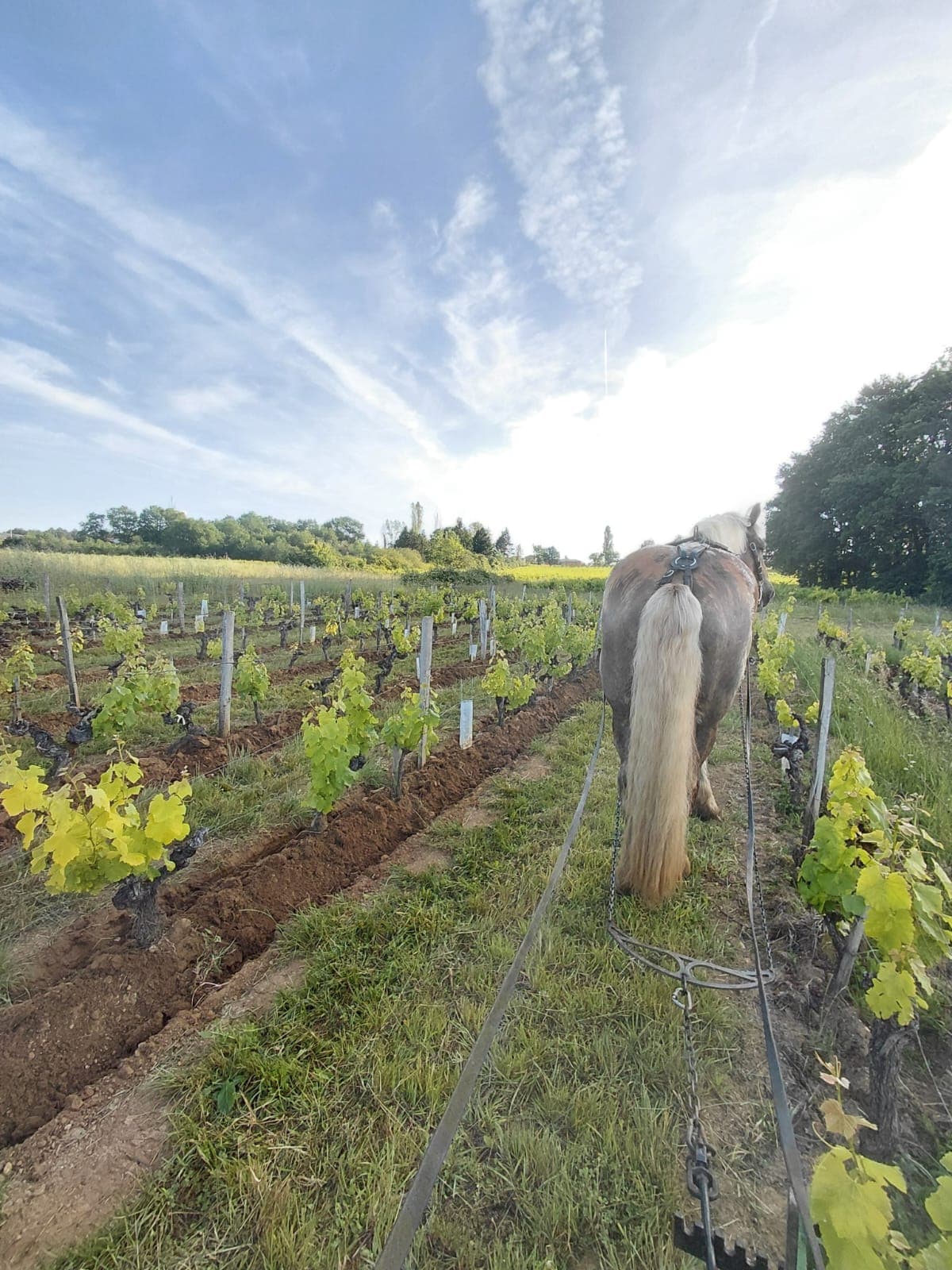
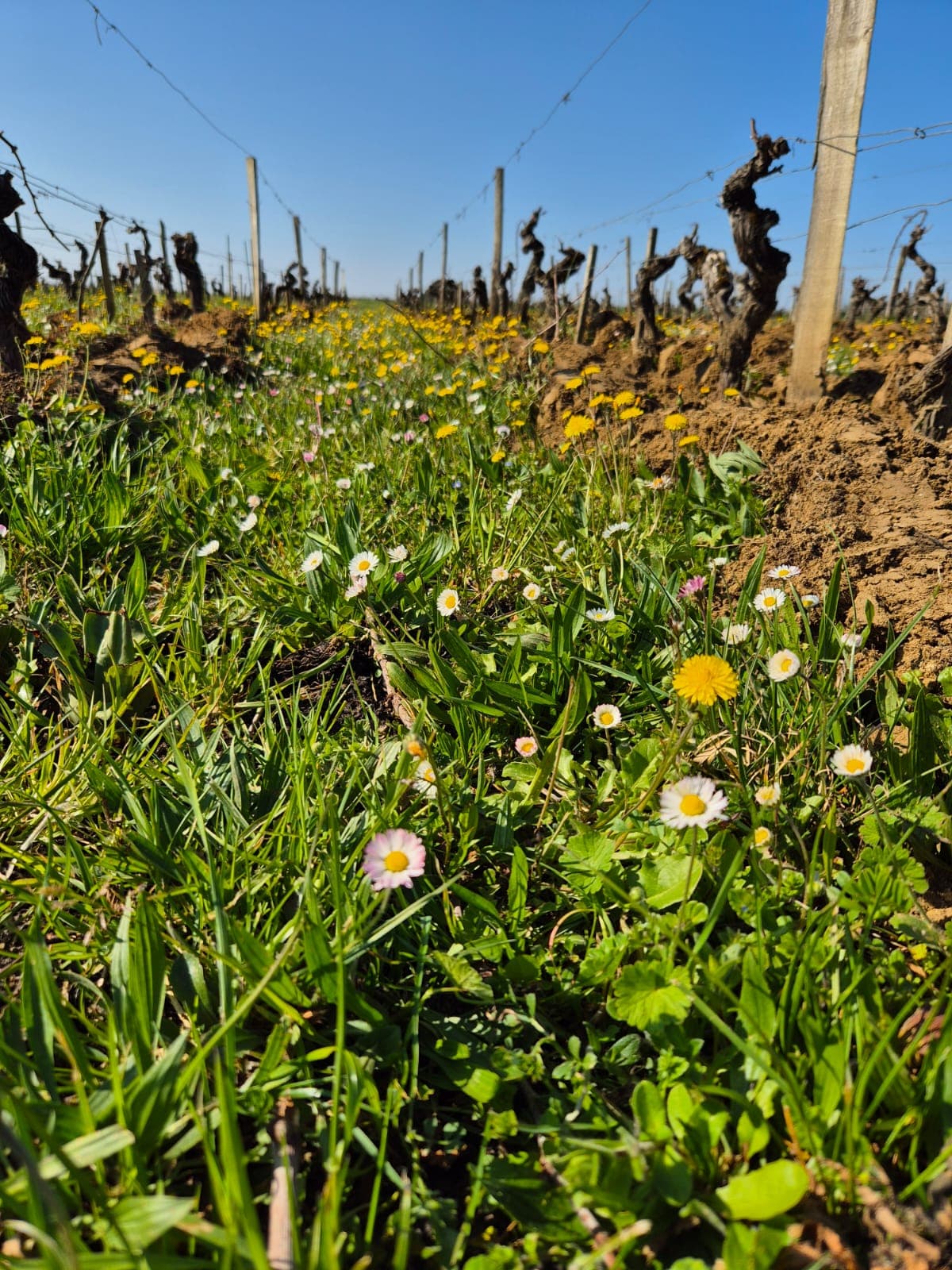
No direct fertilisation of the vines, but amendments designed to stimulate soil life. Grass grows between the rows; only the area directly under the vine is weeded — by horse. In autumn, a cover crop of legumes is sown to fix nitrogen. Every three years, compost and manure are added to maintain soil fertility and its capacity to hold rainwater.
Working with horses
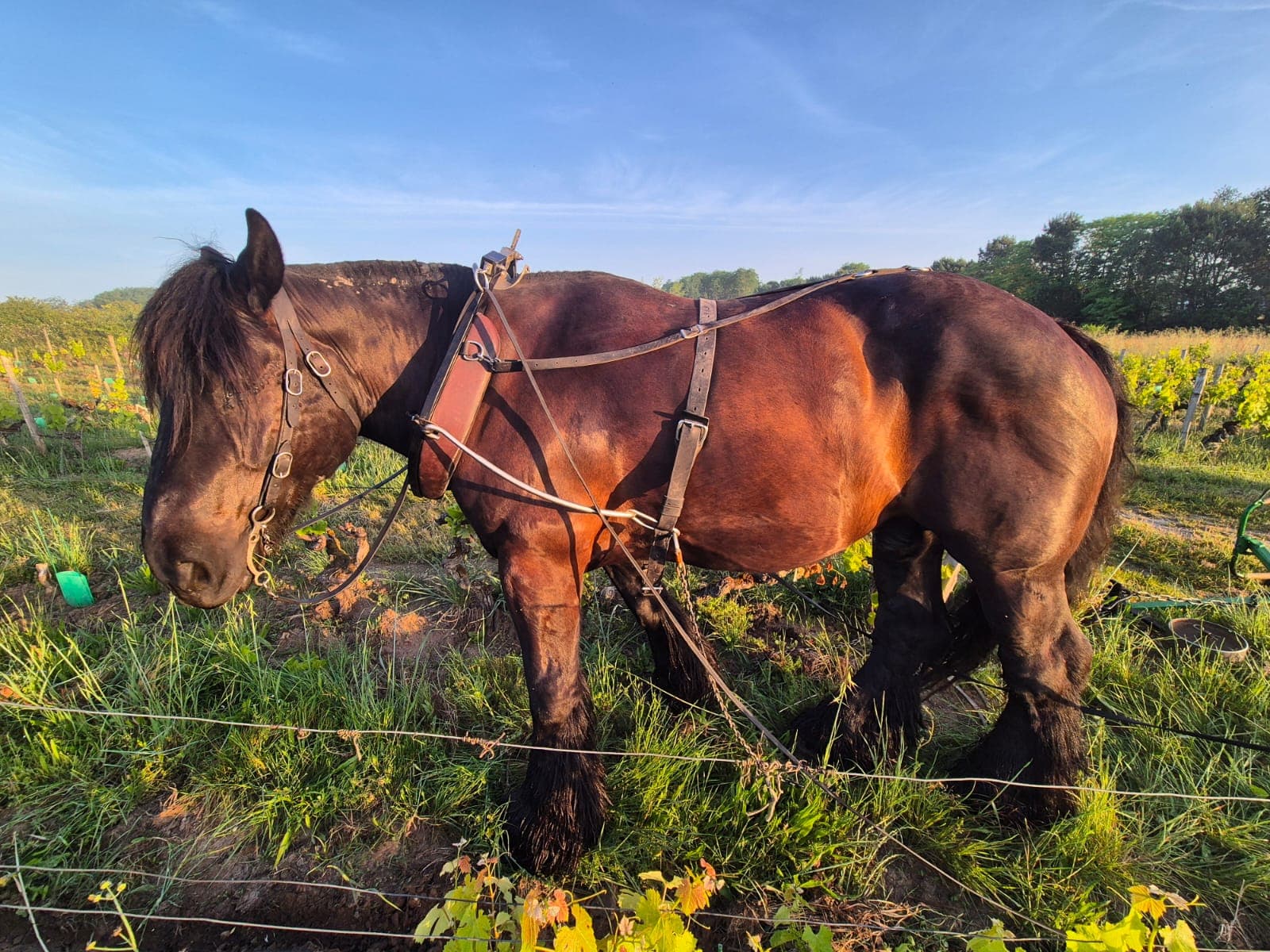
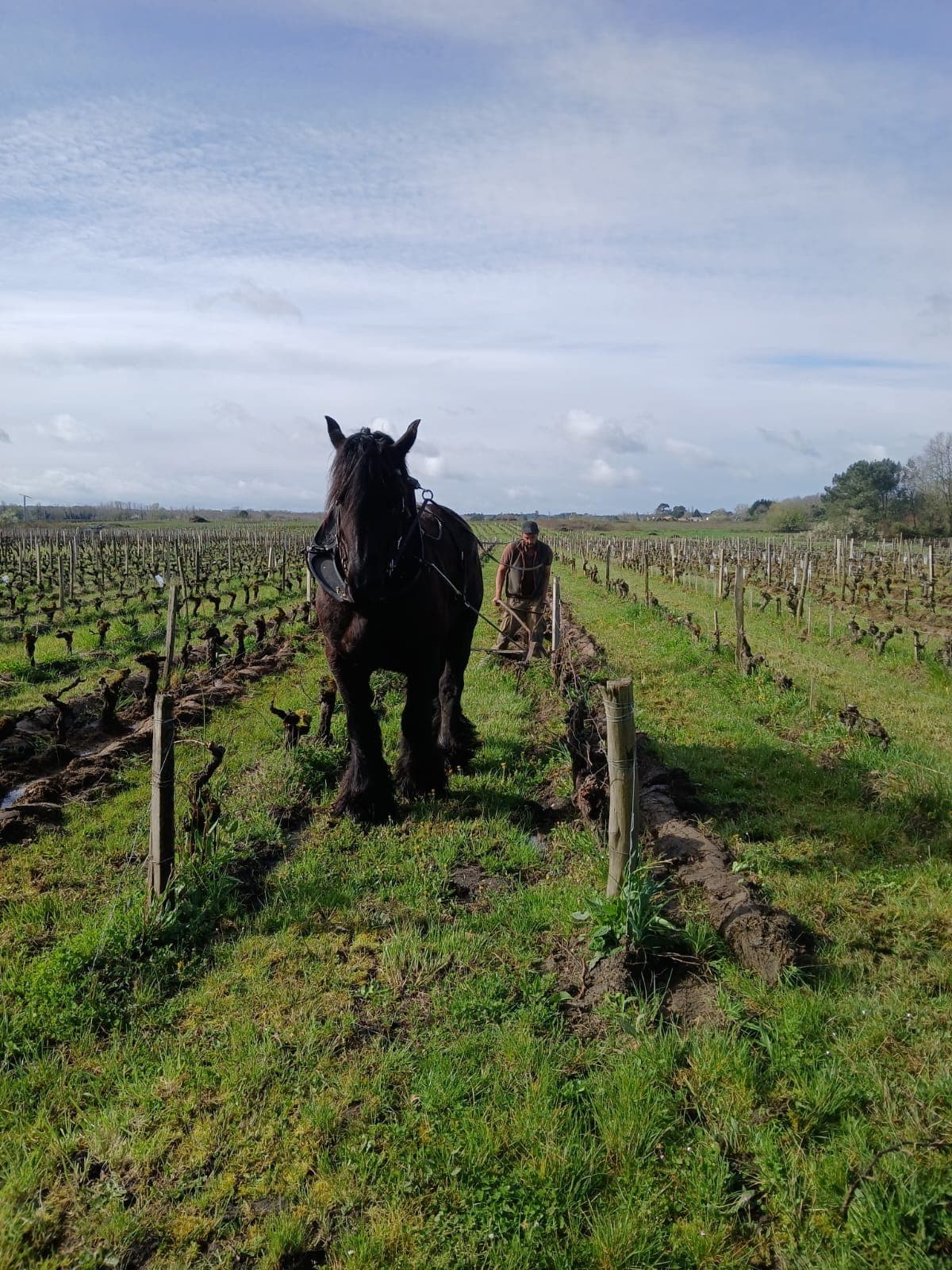
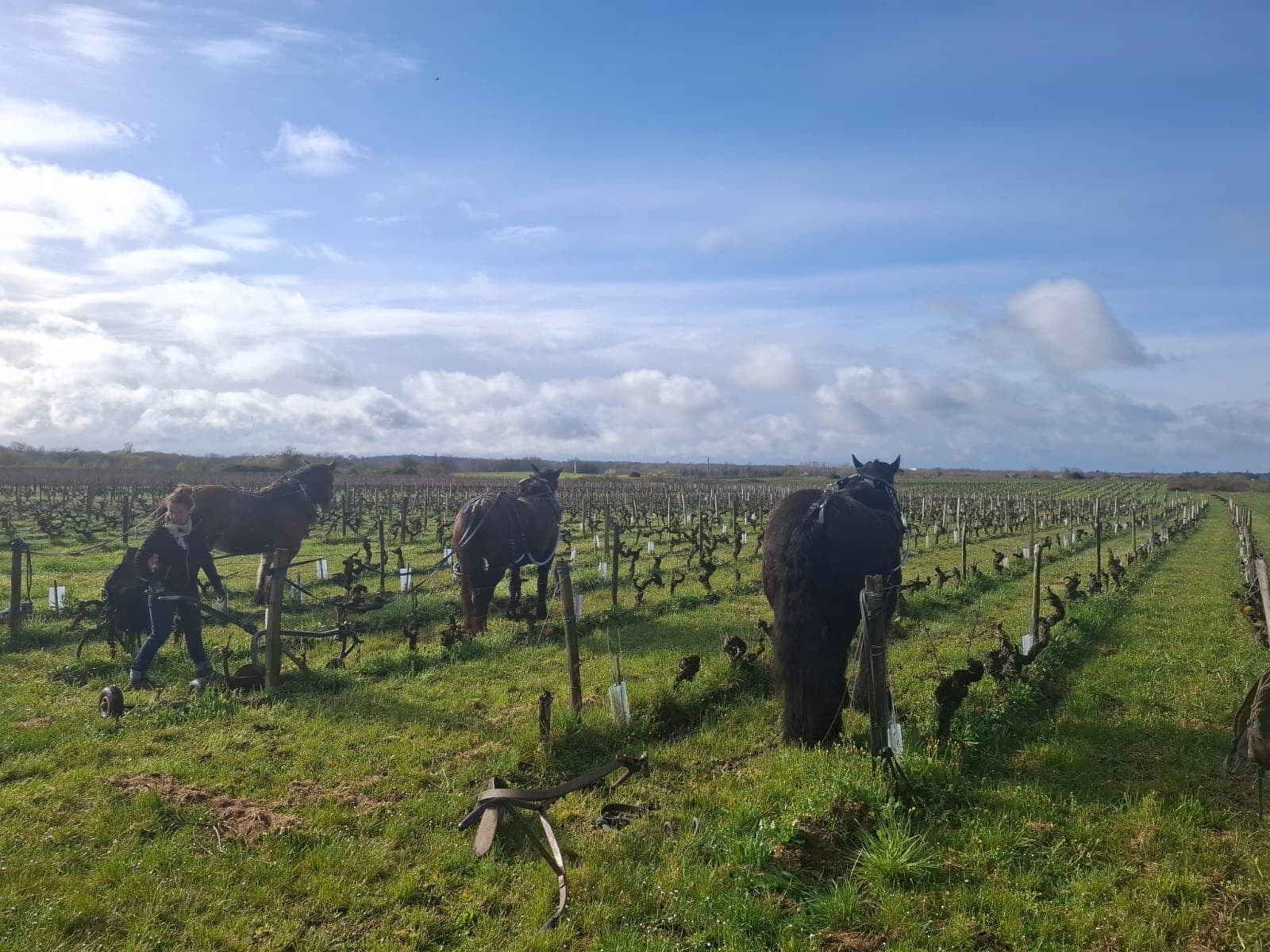
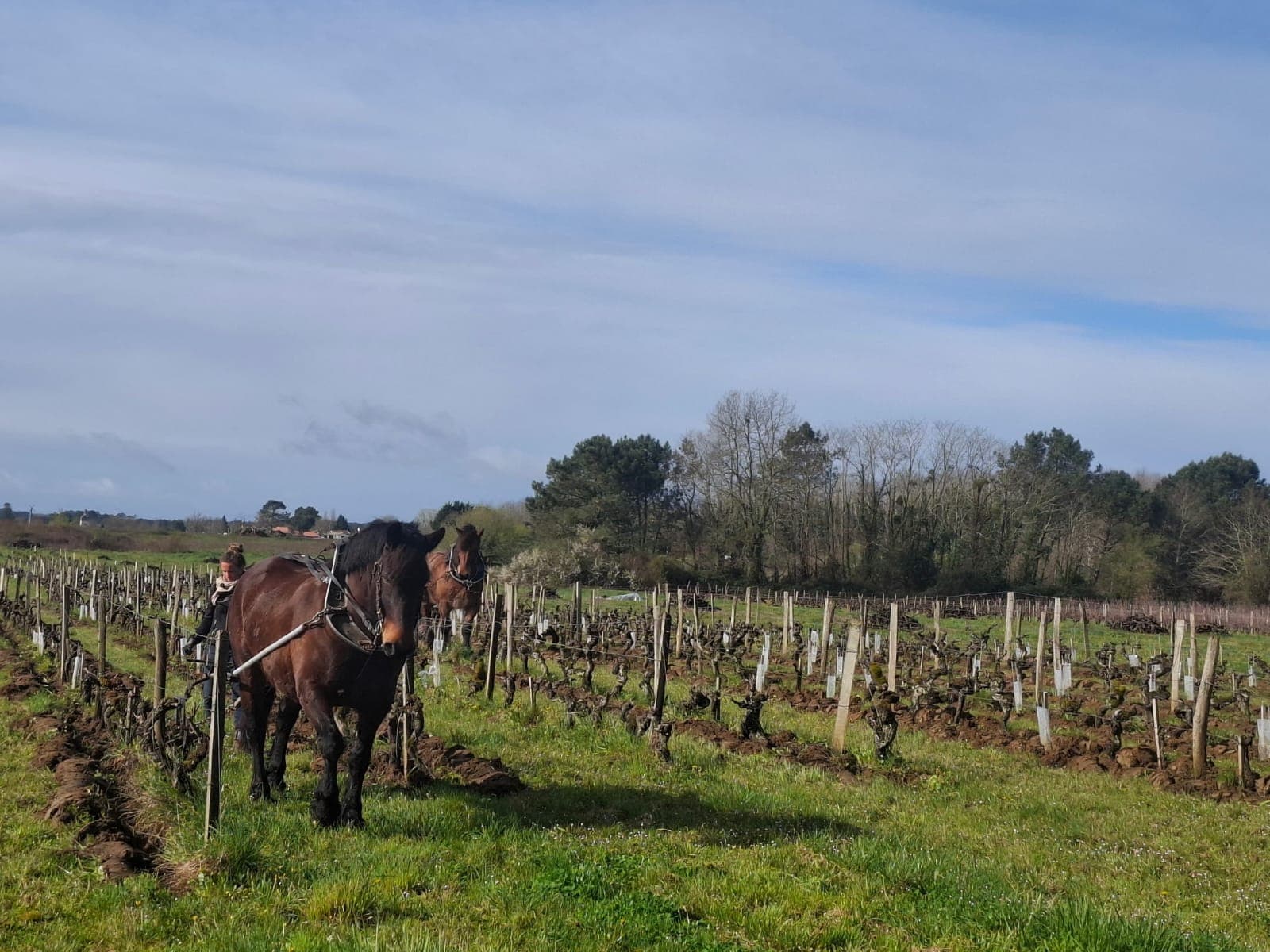
Using horses for under-vine weeding is a deliberate choice: less soil compaction, more precision, and a different connection to the vine. It also helps preserve the microbial life in the soil, which is essential to the vine's health.
Soil work is carried out with horses. It is precise work, respectful of the old, twisted vine stocks that sometimes have to be worked around. Here, the tool adapts to the vine, not the other way round. The estate is thereby helping to revive the trade of horse-drawn ploughman, whose benefits are being rediscovered today.
Reasoned disease management
Anti-mildew treatments comply with organic farming standards. Plant decoctions — particularly willow, horsetail and osier — are used to reduce copper dosages. Canopy management through spring bud removal also prevents the dense foliage that encourages disease.
Towards organic certification
Since 2026, the estate has been pursuing organic farming certification. No green harvesting is practised — one of the advantages of old vines is that the plant naturally regulates its own crop load, without the vigour of its youth.